When your front desk becomes the bottleneck at 6 PM—and empty chairs start costing real money
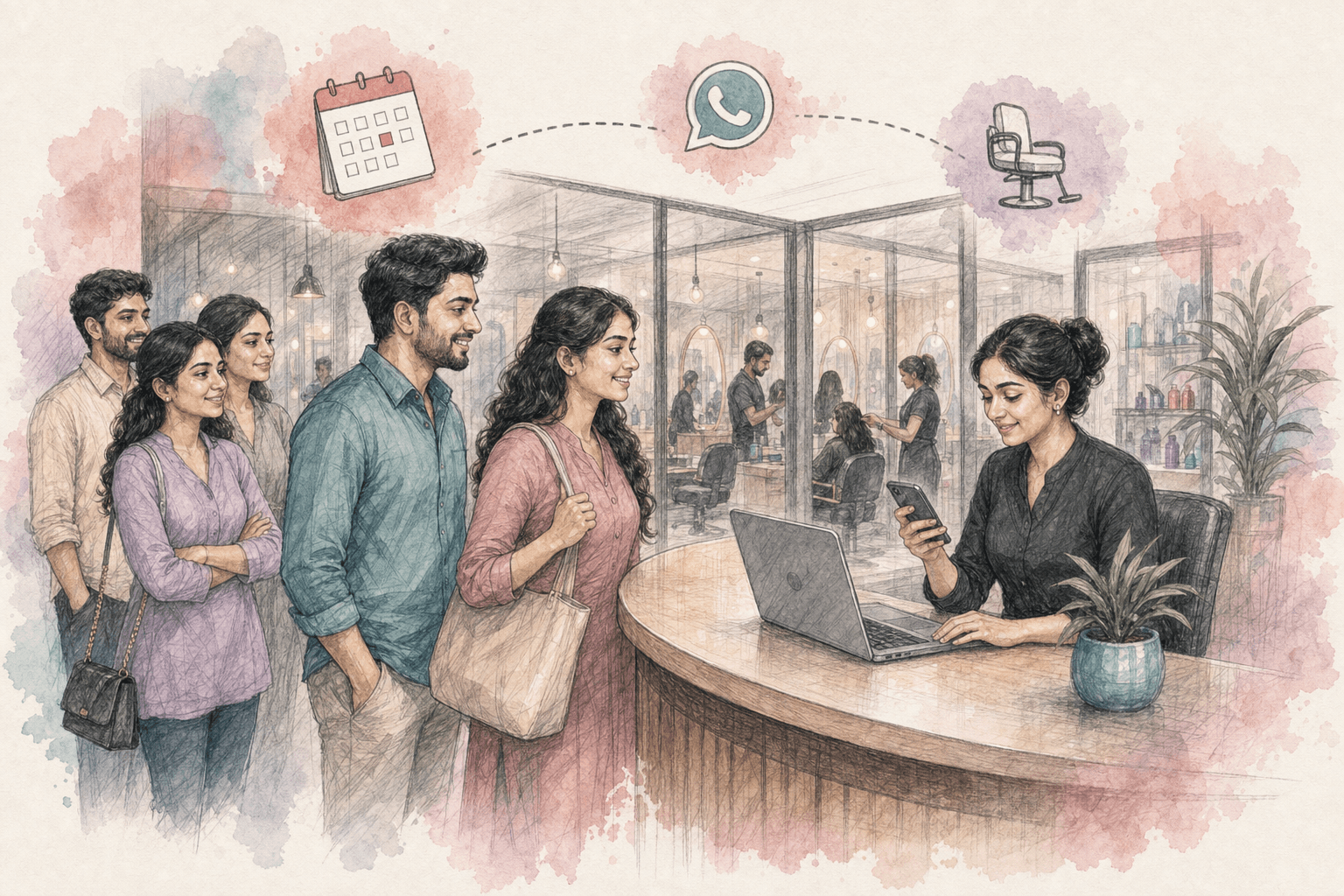
It is 5:47 PM on a Saturday. Priya's salon in Indiranagar has eight chairs, six stylists on the floor, and a front desk that is about to become the most expensive square foot in the building. Two confirmed clients have not arrived. Three walk-ins are waiting. And on WhatsApp, a regular insists she booked the 6:15 slot with Ravi—except Ravi's calendar already shows a colour client until 7.
The empty chair tax nobody calculates
Most owners feel the Saturday rush in their shoulders before they feel it in their P&L. That is because no-shows and scheduling gaps are treated as annoyances, not line items. Run the math once and the annoyance becomes a budget problem.
₹1,800Average revenue per 45-minute service slotBased on a ₹2,400 colour service billed in 60 minutes, scaled to a standard cut-and-style block.
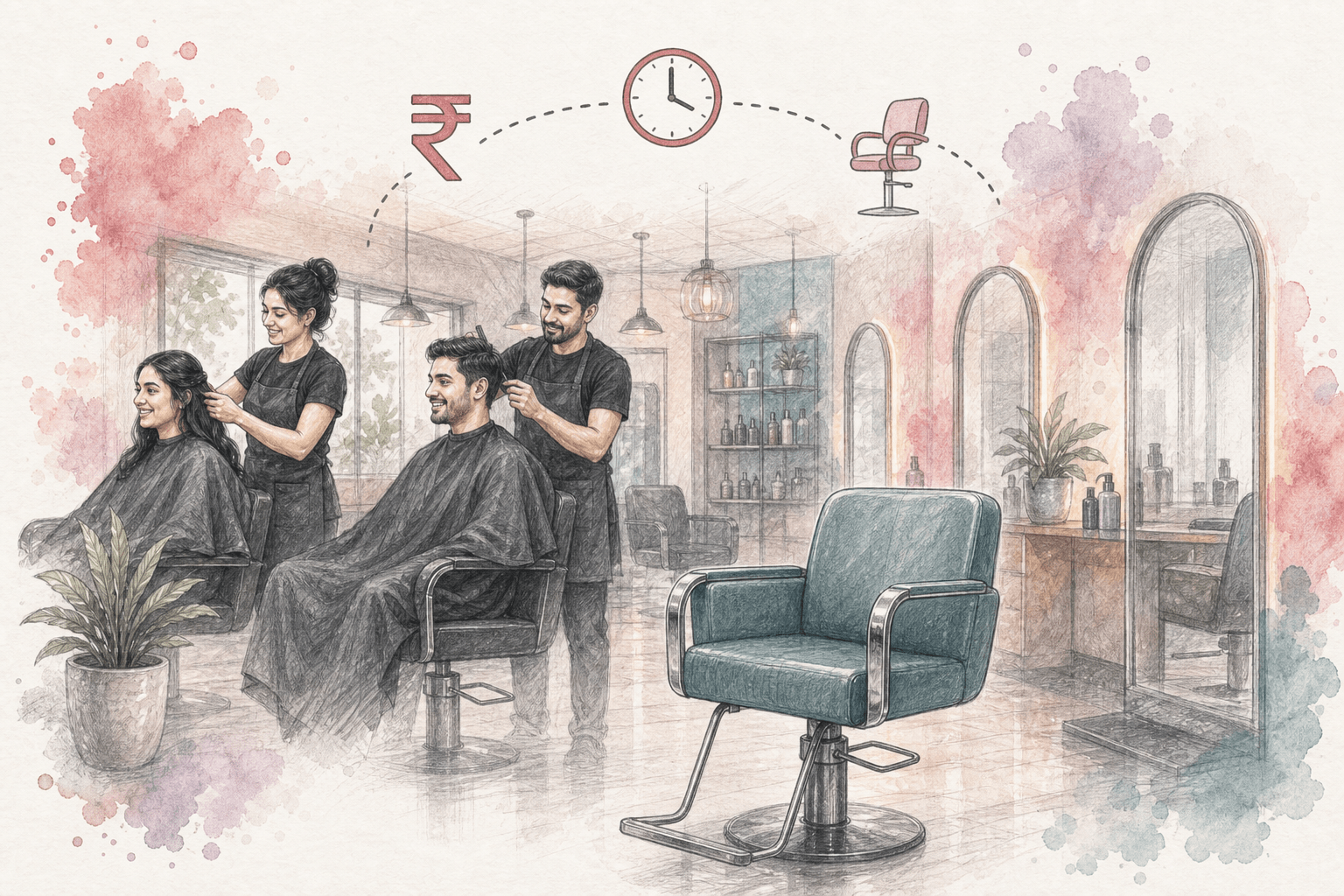
₹14,400Lost revenue from two empty chairs every SaturdayTwo no-shows × ₹1,800 × 4 Saturdays per month. That is before walk-ins you turned away because the board looked full.
We do not have a no-show problem. We have a visibility problem—we only discover the gap when the client is already late.
— Priya, 8-chair salon owner, Bengaluru
The empty chair tax compounds quietly. A stylist waiting costs you labour whether the chair is filled or not. A walk-in turned away because your board looked booked is a client someone else's salon will capture. And the front desk staff juggling phone, WhatsApp, and a paper diary cannot optimise any of it—they can only react.
The 6 PM breakdown, minute by minute
One empty chair during peak hours is not a scheduling glitch—it is a recurring revenue line item.
Why WhatsApp booking breaks at scale
WhatsApp works beautifully for client relationships in India. It fails as a booking system the moment more than one person can confirm an appointment. Stylists reply from personal phones. The front desk replies from the business account. Promotions go out from a third number. None of these threads talk to each other.
The failure mode is predictable: confirmations live in chat, availability lives in someone's head, and the only moment of truth is when the client walks through the door. By then, your options are apologise, rush, or absorb the cost of a free service to save the relationship.
Three fixes that actually stick
The chair did not empty because clients stopped coming. It emptied because we found out too late to fill it.
SalonPro is built for this exact floor rhythm: one appointment board the whole team shares, WhatsApp-friendly reminders, waitlist support, and analytics that show where appointments drop off before they become empty chairs. The goal is not more software—it is fewer 6 PM conversations that start with 'there has been a mistake.'
 SalonPro